
Henna Party in Israel: Moroccan and Yemenite Henna Ceremonies
In short: A henna (hina) is a traditional celebration held a few days to two weeks before a Jewish wedding, mainly in Moroccan, Yemenite and other Sephardic families. The bride and groom enter in traditional costumes with drums and singing, a decorated henna bowl is brought in, a little henna is placed on the palms of the couple and their family for blessing and abundance, and the night continues with dancing, blessings and a table full of sweets. Happy Women produces Moroccan, Yemenite or combined henna ceremonies at home or in a hall, with decor, costumes and props, for about 1,500 to 6,000 ₪ depending on the size of the event.
Planning a henna in Israel? Get free advice
Free advice, no obligation. Women-only team, from Dimona and Be'er Sheva up to Kiryat Shmona, including Jerusalem. Available on Saturday nights after Shabbat.
For couples marrying in Israel, and for families abroad with Moroccan or Yemenite roots, the henna is often the most colorful and joyful night of the whole wedding season. It connects the couple to their grandparents' traditions, and it is pure fun: costumes, music, drums and plenty of sweets. If you are planning a henna in Israel from abroad, this guide explains the traditions, what a full production includes and what it costs.
תוכן עניינים6 נושאים
How a henna ceremony works
- Getting dressed. The bride, the groom and close family put on traditional costumes: embroidered caftans, decorated headdresses and jewelry.
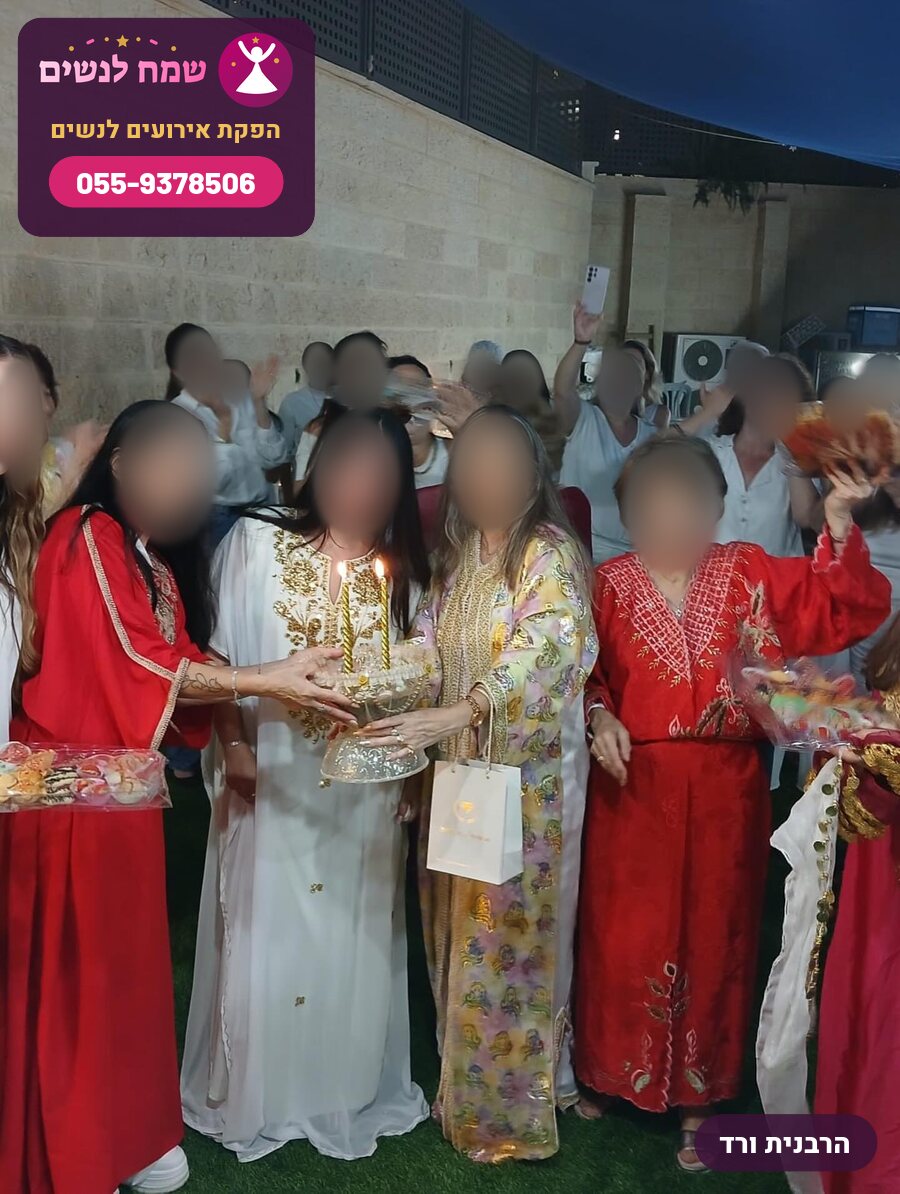
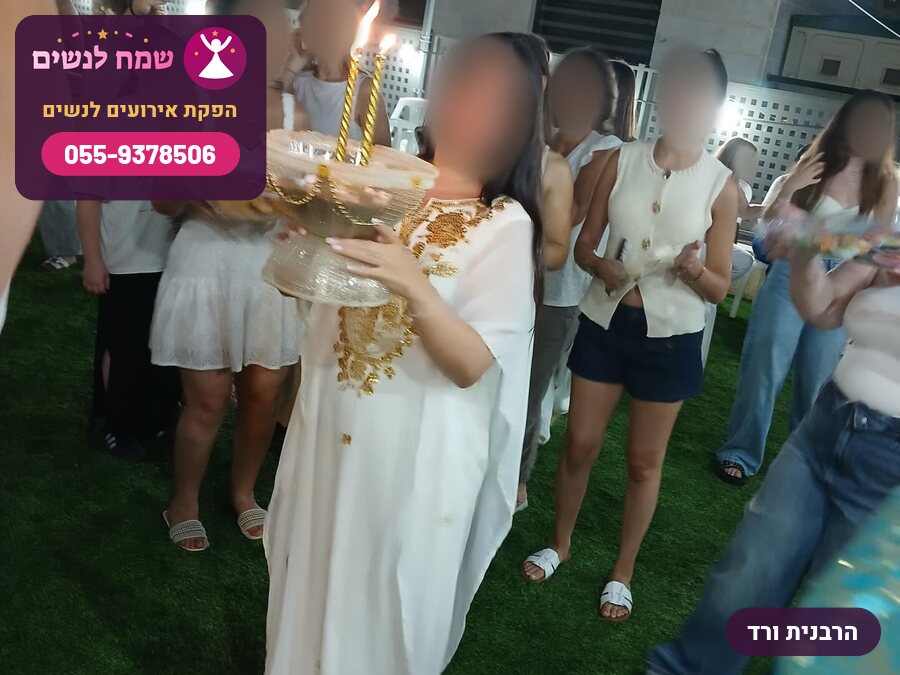
- The entrance. The couple enters with drums, singing and ululations, often carried on a decorated chair or palanquin, while the henna bowl, surrounded by candles, is carried in by the women of the family.
- The henna. The grandmother, the mother or another honored woman places a little henna on the palms of the bride and groom, and then on family members and guests, as a blessing for luck, abundance and a happy home.
- Blessings, dancing and sweets. The night continues with traditional music, dancing and a table of Moroccan cookies, dried fruit, nuts and mint tea.
Moroccan henna or Yemenite henna?
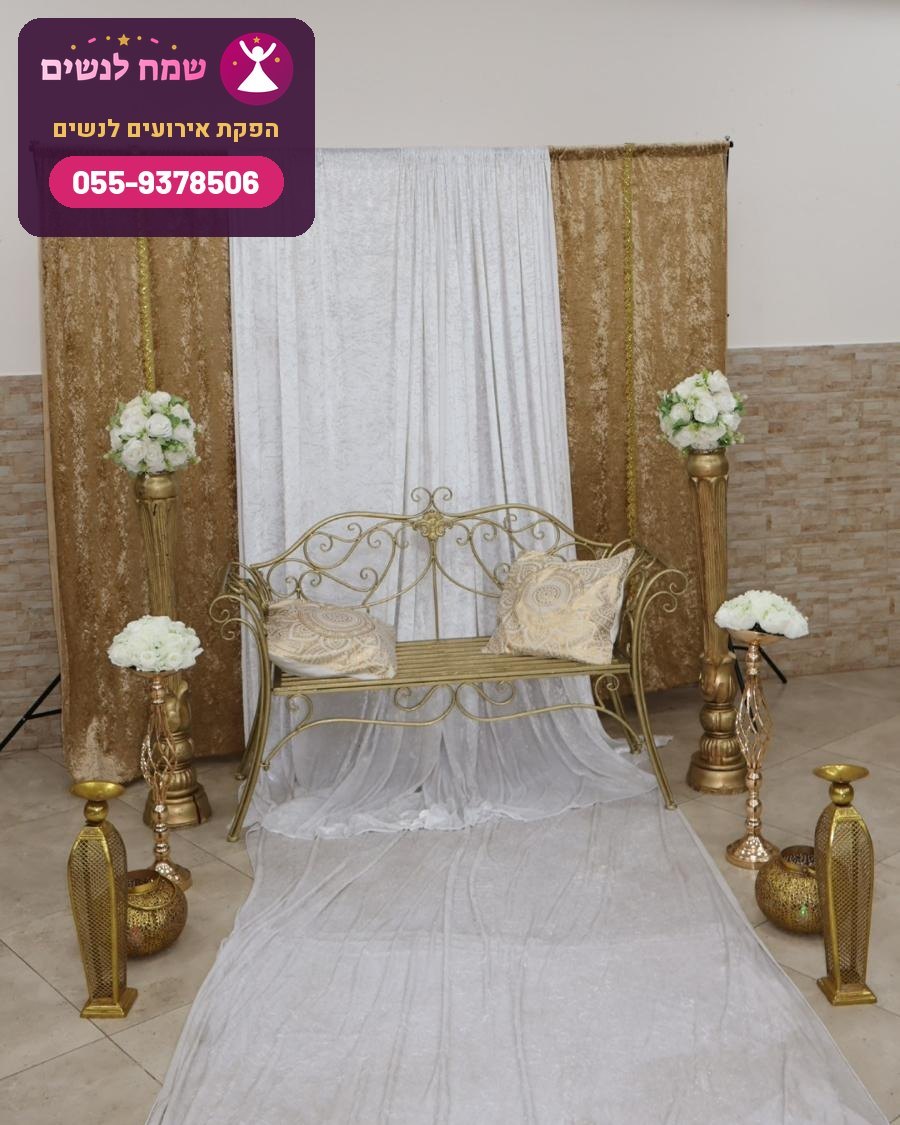
A Moroccan henna is known for its abundance: rich decor in gold, red and green, lanterns, a henna tent, a decorated throne for the couple and a long table of homemade cookies. The costumes are embroidered caftans, often in velvet and gold.
A Yemenite henna is known for the bride's spectacular costume: a tall decorated headdress, layers of jewelry and flowers, believed to protect and bless her. In the past the celebrations lasted seven nights, and today they are usually held on one evening.
When the bride and groom come from different backgrounds, many families choose a combined henna, with two costume changes and music from both traditions.
What a henna production can include
- Decor and backdrop in Moroccan or Yemenite style, at home, in a garden or in a hall
- Traditional costumes for the bride, the groom and family members
- A decorated throne or palanquin, a henna tent and a decorated henna bowl
- A designed photo corner with the couple's names
- A female drummer or traditional music for the entrance and dancing
- A sweets table with traditional cookies, dried fruit and nuts
Some brides also hold a women's evening before the wedding that combines a henna with a challah ceremony led by a rebbetzin. Read about a challah evening in Israel.
Planning a henna in Israel from abroad
- Timing: most families hold the henna on a weekday evening in the week or two before the wedding. Saturday night after Shabbat is also popular. We don't work on Shabbat or holidays.
- Book early: two to three months ahead is ideal, especially in the summer wedding season.
- Plan remotely: send us a WhatsApp message in English with the date, city, number of guests and the style you want, and we will send ideas and a quote.
- Size: a henna can be an intimate family evening at home with 30 guests, or a full party in a hall with 200.
How much does a henna party in Israel cost?
| Option | Typical price |
|---|---|
| Moroccan henna production | About 1,500 to 6,000 ₪ |
| Yemenite henna production | About 1,500 to 6,000 ₪ |
| Henna photo corner, drummer, extra costumes | Priced by request |
The price depends mainly on the scope of the decor and the number of costumes. Henna costumes are also a fun addition at a bat mitzvah in Israel. For everything else we help with, visit our English guide to women's events in Israel.
Frequently asked questions
| Question | Answer |
|---|---|
| What is a henna party? | A traditional celebration before a Jewish wedding, mainly in Moroccan and Yemenite families. The couple wears traditional costumes, henna is placed on their palms for blessing, and the night continues with music, dancing and sweets. |
| When is the henna held? | Usually a few days to two weeks before the wedding, on a weekday evening or on Saturday night after Shabbat. |
| What is the difference between a Moroccan and a Yemenite henna? | A Moroccan henna is known for rich decor, embroidered caftans and a table of cookies. A Yemenite henna is known for the bride's tall decorated headdress and jewelry. Many couples combine both. |
| How much does a henna cost in Israel? | A full production usually costs about 1,500 to 6,000 ₪, depending on the decor and the number of costumes. |
| Can the henna be held at home? | Yes. We produce henna ceremonies at home, in gardens and in event halls. |
| Can we plan it while we live abroad? | Yes. Most families abroad plan with us over WhatsApp and video calls, and you can write to us in English. |
Let's plan your henna together
Free advice, no obligation. Women-only team, from Dimona and Be'er Sheva up to Kiryat Shmona, including Jerusalem. Available on Saturday nights after Shabbat.
This page is also available in Hebrew: טקס חינה.